SimplyApply
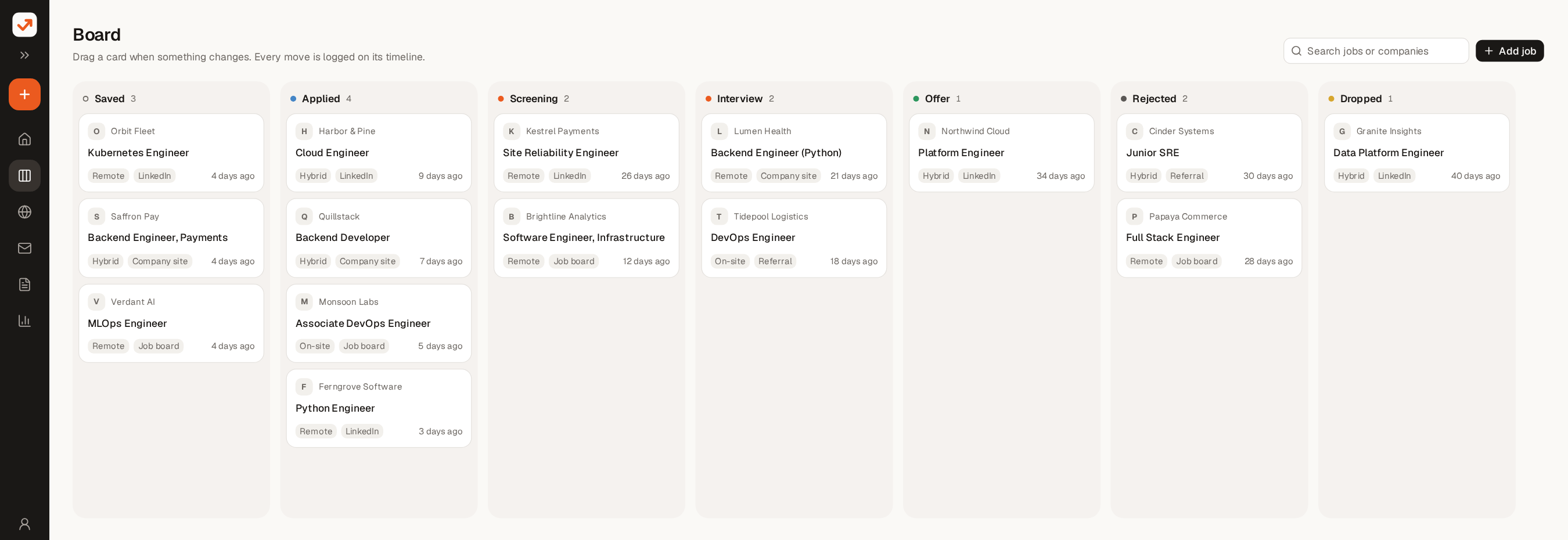
Problem
When I applied for jobs, the applications lived in a spreadsheet, the job posts in browser tabs and the CV versions in a folder of files named cv-final-2.pdf. Two questions were always hard to answer: where did I apply, and which CV did I send? Tailoring each CV and cover letter by hand also took longer than finding the job.
I wanted one place that keeps the pipeline, the timeline of each application and the documents I sent. I also wanted the AI work done for me, on whichever model I chose.
Architecture / Approach
- FastAPI and PostgreSQL with async SQLAlchemy and Alembic. The api owns the data and every AI action.
- Every AI action is an agent run. Importing a job, tailoring a CV and writing a cover letter each start a run on the api. The app follows it over server-sent events in a floating agent window, and the agent can stop and ask the user a question there.
- The model is a setting, not a rewrite. Each feature has its own prompt and can be pinned to its own agent. Server-side runs use Cloudflare Workers AI, with Groq as the fallback when Workers AI errors or returns something that isn't JSON.
- A bridge for local CLI agents. A small Python client on my own computer keeps one outbound WebSocket to the api and runs Claude Code, opencode or Codex with my own logins. Nothing on my computer is exposed. Each run gets a temporary folder holding only its input files, which is deleted when the run ends. Claude Code and opencode get no shell.
- An MCP server inside the api. Sixteen tools let Claude, or any MCP client, list and move applications, import a job from a link, log activity, tailor a CV, write a cover letter and draft an email.
- A TanStack Start single-page app with Tailwind and shadcn/ui. Its API client is generated from the OpenAPI schema with orval, so the front end can't drift from the api contract.
- CVs are rendered with Typst. A tailored CV is an independent copy of the main CV, so accepting the agent's suggestions for one job never changes another.
- Deployment: the api and Postgres on Railway, and the app on Cloudflare Pages, which proxies
/apito Railway.
Tracking the pipeline
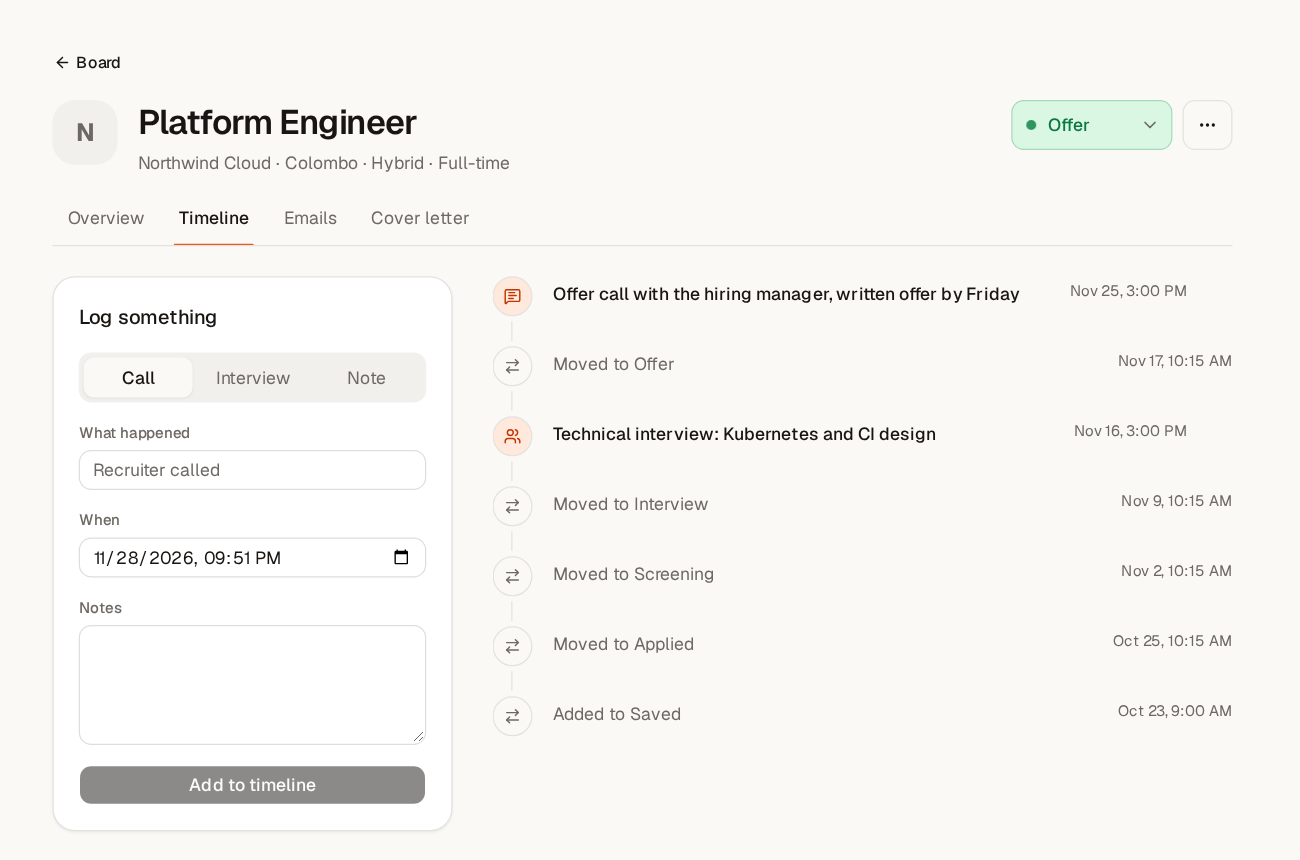
Moving a card on the board logs a stage change on that job's timeline. Calls, interviews and notes go on the same timeline. Because every move is recorded with a time, the analytics come from the history instead of from fields I'd have to keep up to date by hand.
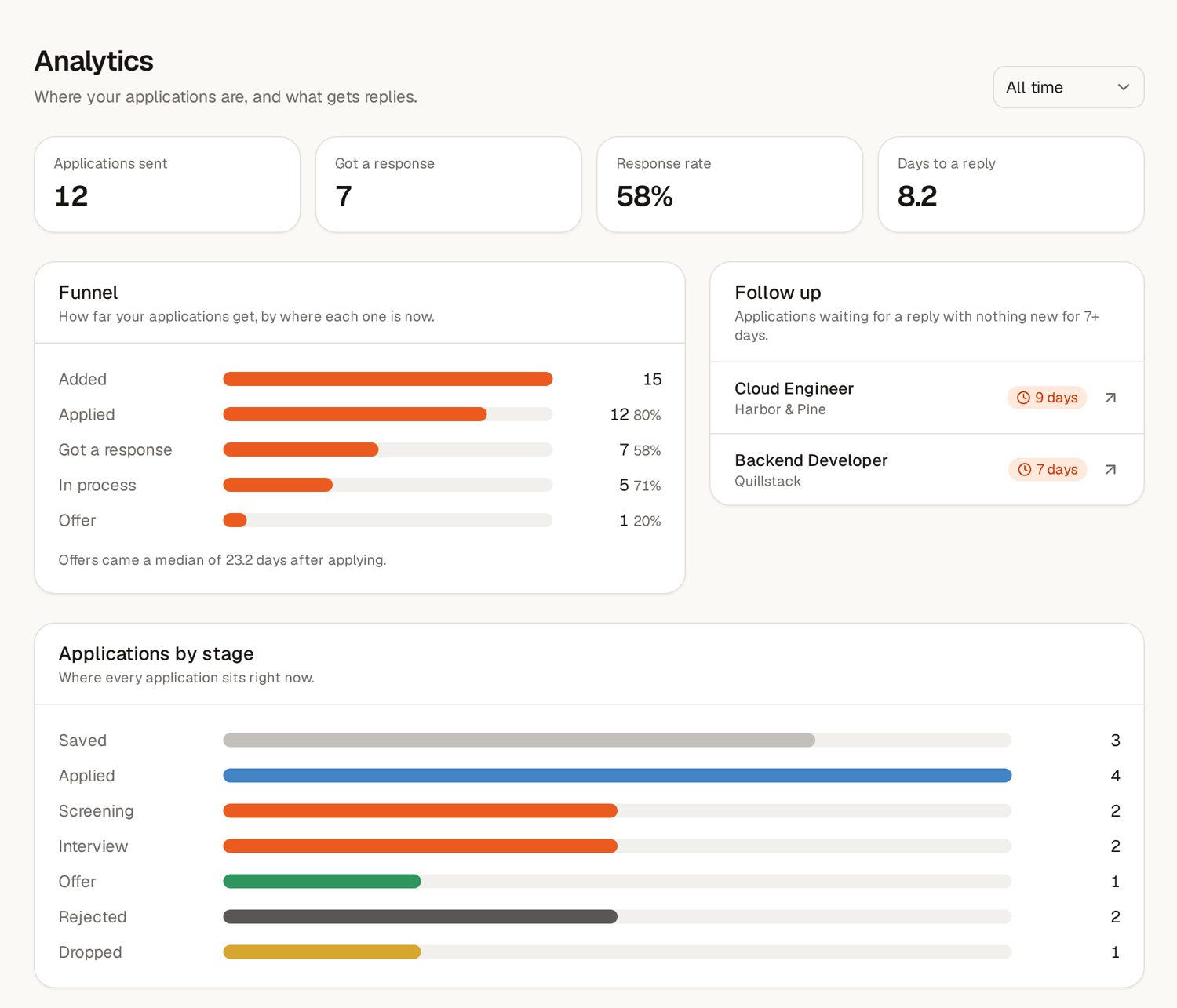
The analytics page shows the funnel, how many days replies take, which sources and CVs get responses, and which applications have gone quiet for a week and need a follow-up.
Handling untrusted input
Job links, pasted text and CV templates all come from outside, so the api treats them as untrusted. The link importer refuses internal addresses: localhost, private ranges, the cloud metadata address, file:// URLs, and redirects that lead to any of these. Templates can't read files on the server.
Testing
The api has 66 automated tests. They run against a real PostgreSQL in Docker, not mocks. They cover the analytics numbers, tailored CVs staying independent copies, the Workers AI to Groq fallback, and the untrusted-input rules above. Pre-commit runs ruff, pyright, oxlint, oxfmt and the TypeScript check on every commit.
My Contribution
I built all of it alone: the api, the app, the bridge, the MCP server and the deployment. The decision I'd make again is making every AI feature a run with its own prompt and agent setting. It meant adding Groq, then the bridge, then MCP, without touching the features themselves.
Outcome
SimplyApply is live, and I use it for my own job search. It's invite-only.